

What large flower preservation studios won't tell you (and why it matters)
If you've been researching flower preservation, you've probably stumbled across some big names by now. Large studios with beautiful websites, impressive turnaround times, and the ability to ship your bouquet across the country. It all looks very polished, very professional.
And honestly? Those businesses have figured out something genuinely hard. Scaling a labor-intensive craft like flower preservation takes real entrepreneurial grit. I respect that.
But here's the thing: scaling requires trade-offs. And those trade-offs don't always make it onto the homepage (or their advertising). So I want to share a few things I wish more brides knew before deciding who gets to preserve their flowers.
Efficiency is the whole point
Large studios are built for throughput. Every step (intake, drying, design, assembly, shipping) is systematized to keep things moving. That's not a flaw in the model. That is the model.
But I've learned something over four years of doing this work: "efficient" and "meticulous" don't usually live in the same room. When you're processing hundreds or thousands of orders a year, there's pressure to move fast. Your flowers become part of a queue. And I get it, that's how businesses grow.
But your bouquet isn't a batch number. It's the flowers you carried down the aisle. It's the blooms your grandmother would have loved. It's a once-in-a-lifetime keepsake, and that distinction really does matter.
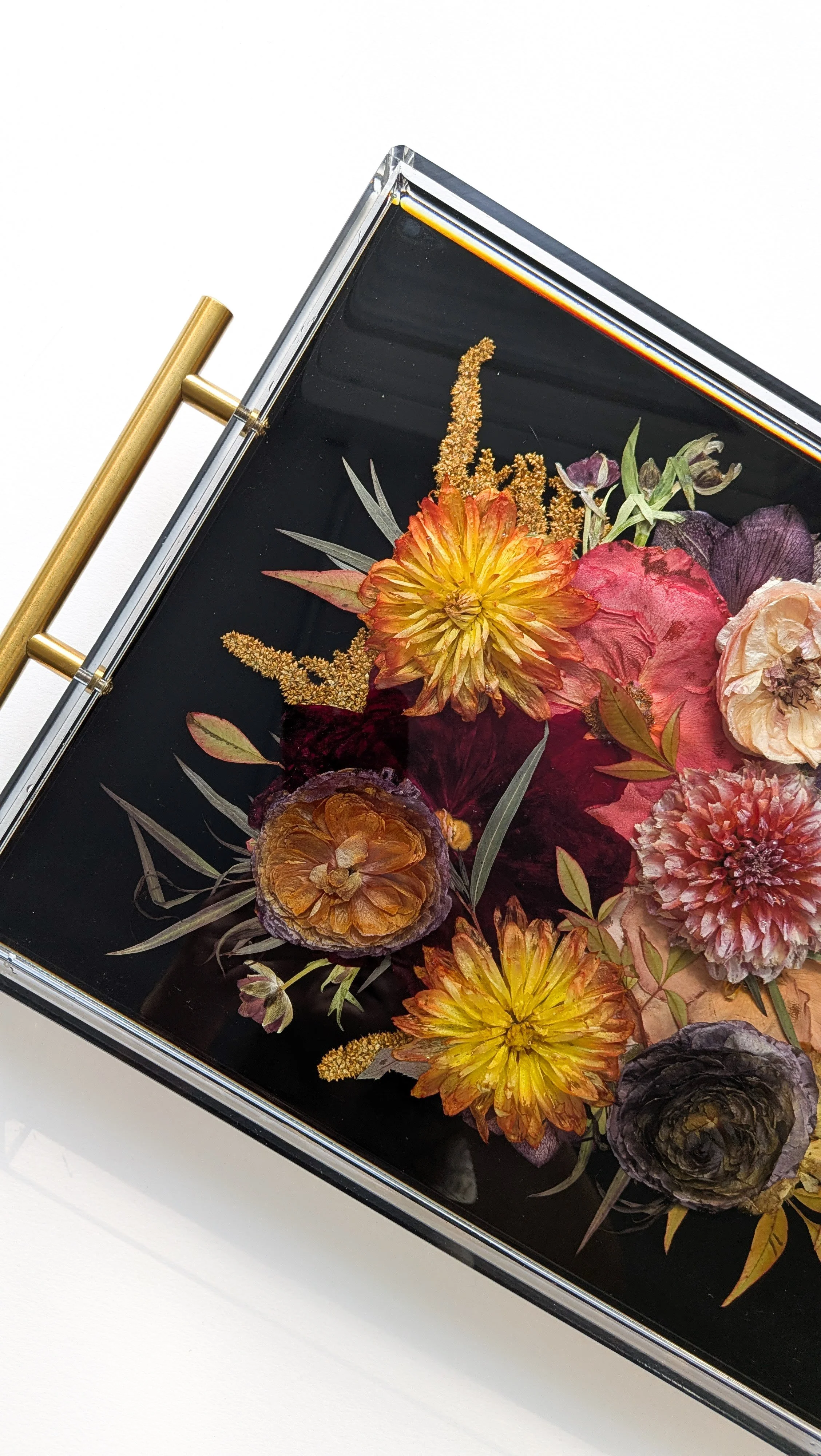
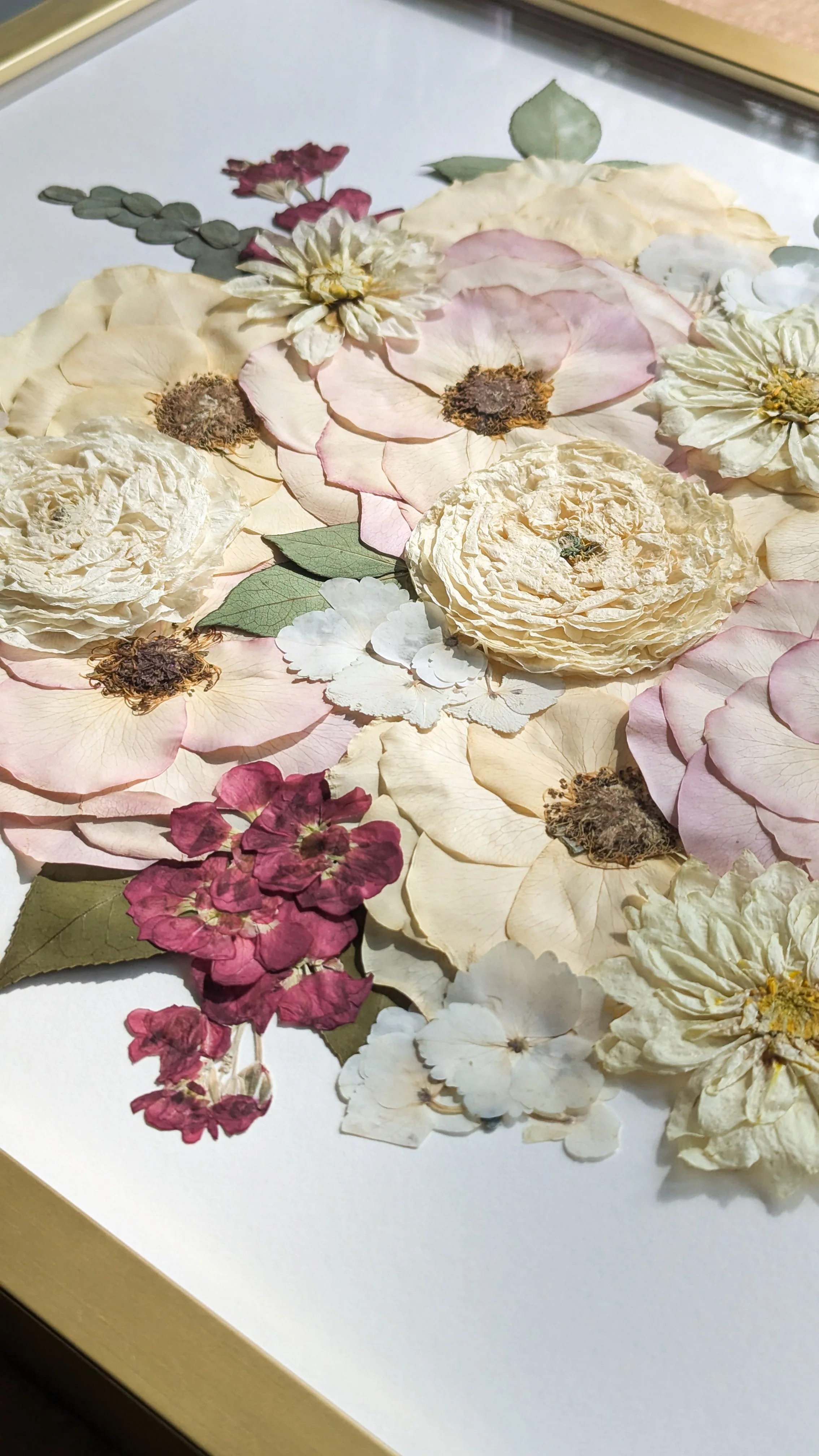
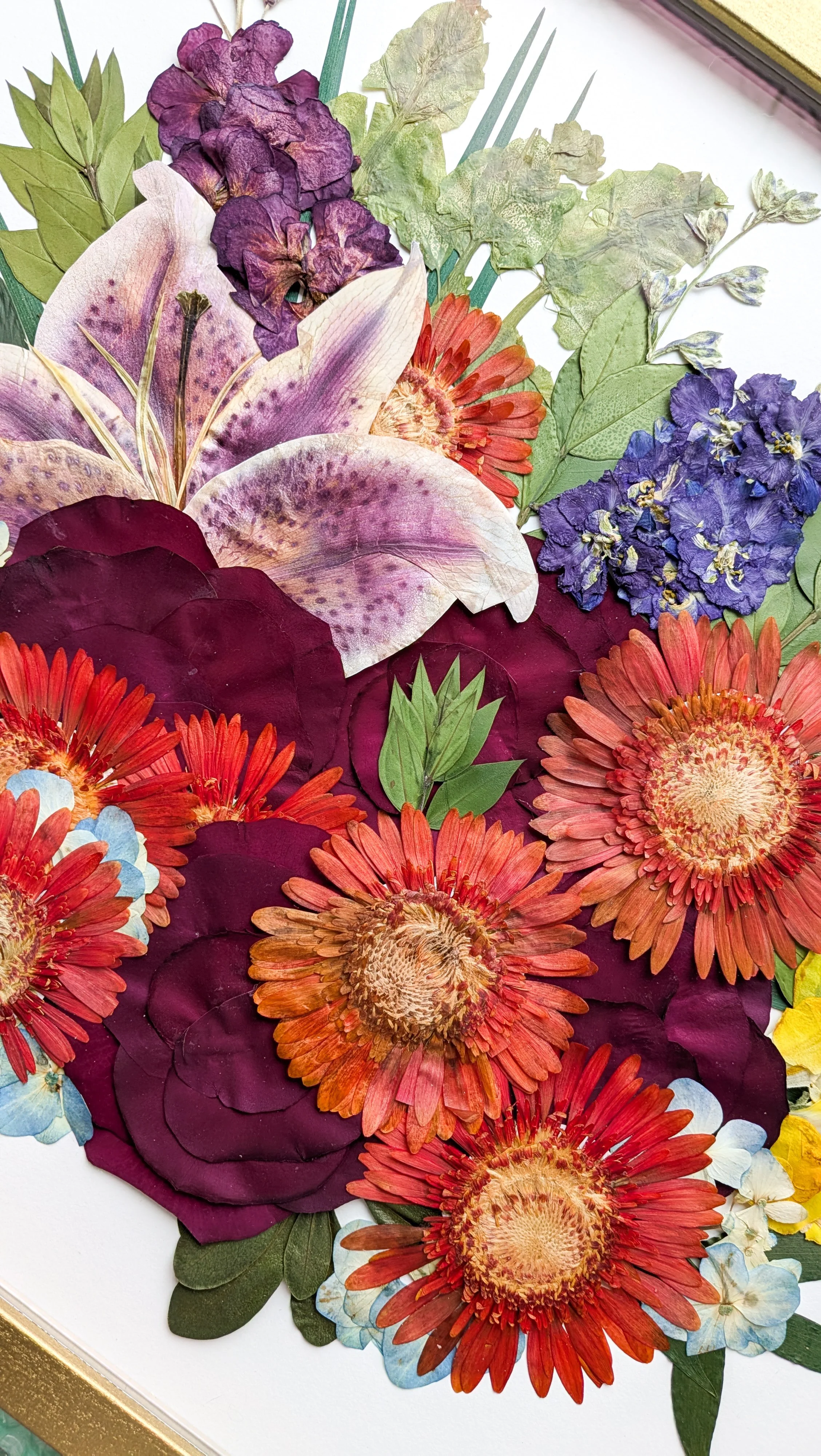
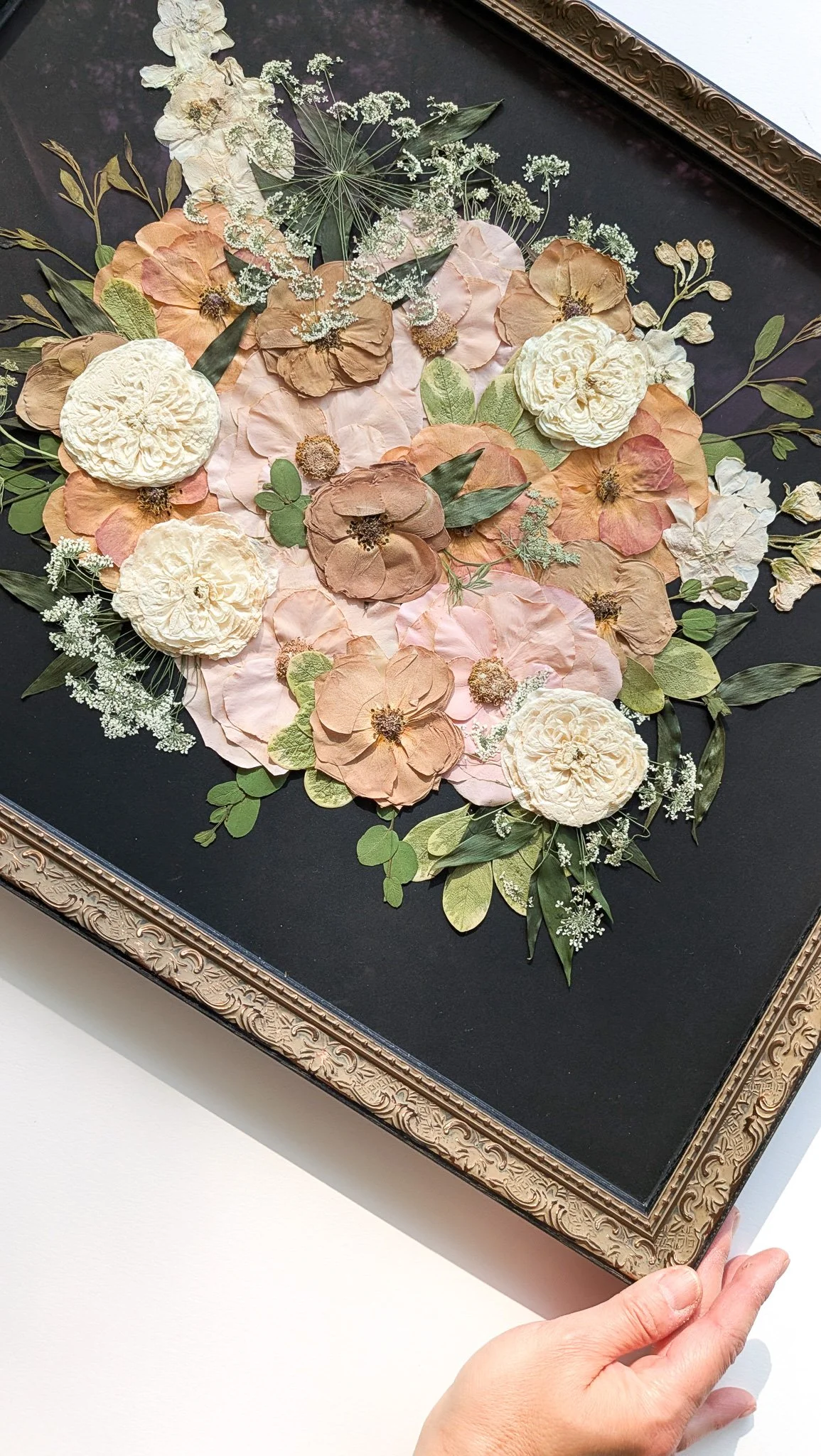
Your flowers pass through many hands
At a high-volume studio, one person might receive your bouquet. Someone else dries it. Another person designs. Another assembles. Another packages and ships. In many cases, nobody sees your piece from the moment it arrives to the moment it leaves.
I think about this a lot, because my experience is so different. I meet my clients. I hear their stories. I know which flowers came from a grandmother's garden or which bloom the bride almost didn't include. By the time I sit down to design, I'm not just arranging petals. I'm holding something that already means something to me.
If that kind of personal connection matters to you, it's worth asking how the process actually works before you commit.
Experience takes years, not weeks
I practiced for a full year before I felt ready to accept my first real commission. A full year of experimenting with my cutting garden flowers, making mistakes, watching things go wrong, and slowly figuring out what works. Many independent artists I know did the same: hundreds of hours of learning before ever touching someone's irreplaceable bouquet.
When preservation becomes a scalable service, that learning curve tends to get compressed. Systems replace intuition. Checklists replace judgment. And look, systems aren't bad. But there's a real difference between knowing the steps and truly mastering the craft. You can feel it in the finished piece.
Designs often look... the same
When you scale, you standardize. It's just math. Large studios often have limited product lines with a consistent look across every piece. That's not necessarily wrong. It's just a choice.
But if you want something that actually reflects your flowers and your story, a template approach might not get you there. Part of what I love about this work is that no two commissions look alike. Every bouquet has its own personality, and I want that to come through.
So what's the right choice for you?
I want to be clear: none of this means large studios are "bad." They serve their market, and for some couples, speed and convenience are exactly what they need. That's a perfectly valid choice.
But if you value personal attention, artistic individuality, and working with someone who treats your flowers like the heirloom they are, consider going small. Consider going local.
You'll wait longer. I typically need up to 12 months to finish a piece, and I really wish I could do it faster. But you'll also get something made by one person who genuinely cares. Someone who sees your commission through from first email to final pickup. No team. No shortcuts. Just me and your flowers.
Your bouquet worked hard for you on your wedding day. It deserves to keep working, preserved in a way that honors what it meant.