

I understand the appeal. Floating frames look incredible in photos. That clean, modern aesthetic where your pressed flowers appear suspended between two panes of glass creates exactly the kind of striking image that stops your scroll on Instagram. The "floating" effect is genuinely beautiful.
As someone who's created hundreds of pressed flower pieces over the past few years, I have some thoughts about this trend. Not to talk you out of floating frames if they're genuinely right for you, but to make sure you understand what you're choosing before you commit to something permanent.
By the end of this post, you'll know the practical realities of floating frames that most preservation artists don't discuss upfront. You'll understand the trade-offs. And you'll be able to make an informed decision about whether this framing style actually serves your needs or just looks good in other people's portfolio photos.
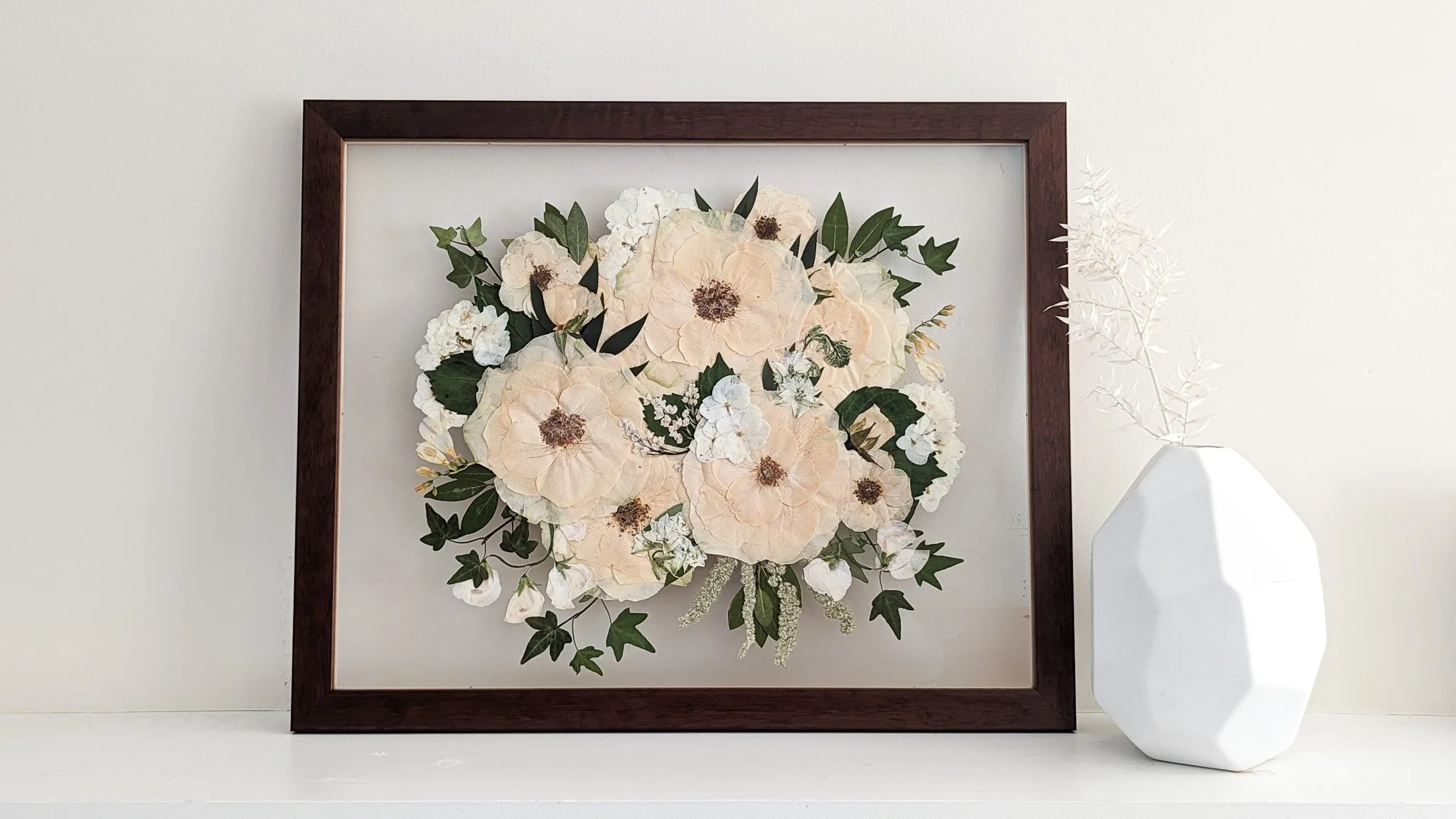
A floating frame I created in 2023
What floating frames actually are
A floating frame consists of two panes of glass with your pressed flowers sandwiched between them. There's no mat board creating a border around the flowers. There's no backing board providing an opaque background. The entire piece is see-through, front and back, which creates that signature "suspended in space" appearance.
Once assembled, the frame is permanently sealed. You can't open it to adjust anything or clean the interior without destroying the seal and essentially ruining the piece.
The style became trendy because it photographs exceptionally well and fits the contemporary minimalist aesthetic that dominates design spaces right now. The flowers take up the entire visible area with no mat board to interrupt the view. Both sides of the flowers are visible, which can be stunning with translucent petals that catch light from behind.
Why floating frames are popular
The appeal is obvious. Floating frames have a clean, contemporary look that works beautifully in modern spaces. The flowers genuinely appear to float, creating visual interest that a traditional matted frame doesn't achieve. You get maximum flower visibility since there's no mat board taking up real estate. The see-through quality can be gorgeous when light hits the piece from different angles throughout the day.
For someone with a minimalist home and a carefully curated aesthetic, I understand why floating frames seem like the obvious choice. They look incredible on a white wall in a space with clean lines and neutral tones.
The question is whether that aesthetic appeal outweighs the practical considerations that come with this framing style.
The practical realities you might want to consider
Let me walk through the aspects of floating frames that rarely come up until after someone has committed to the style.
The permanence problem
Once a floating frame is sealed, that's it. The frame cannot be opened. If a flower fragment detaches over time and falls to the bottom edge of the glass, it stays there. If a petal shifts position, you can't adjust it. If you want to clean the interior or make any modification whatsoever, the only option is to break the seal, which destroys the frame's integrity.
Compare this to matted frames, where the backing can be carefully removed and replaced if needed. I've had clients bring me matted pieces years after creation for minor adjustments or cleaning. That option doesn't exist with floating frames.
This matters because you're making a permanent choice about a piece you'll presumably own for decades. Pressed flowers are organic materials. They can shift slightly over time. Small fragments can detach. With a floating frame, whatever happens inside that sealed space is there forever.
Dust and debris during assembly
Here's something most people don't realize until they own a floating frame in person rather than seeing it in photos: some amount of dust and debris gets trapped during assembly. It's inevitable.
Glass is statically charged. Dried flowers shed microscopic particles. Even in a controlled environment with meticulous cleaning, some specks end up between the glass panes. You won't notice them in portfolio photos on Instagram. You will notice them when the piece is hanging on your wall and you're looking at it every day.
I'm not talking about careless assembly. I'm talking about the inherent nature of working with glass and dried organic materials. The static electricity attracts particles. No amount of careful cleaning eliminates this completely.
The wall color factor
This is the one that catches people off guard most often. The transparent back of a floating frame means your wall color becomes part of the composition.
If you hang your floating frame on a white wall, it looks one way. Move it to a colored wall, and the entire piece changes. The flowers read differently against different backgrounds. What looked crisp and modern on white might look muddy or washed out on sage green or dusty blue.
Matted frames create their own neutral backdrop. The mat board provides a consistent background regardless of what wall color you choose. This gives you flexibility if you move homes or redecorate. Your preserved flowers remain constant while your living space changes around them.
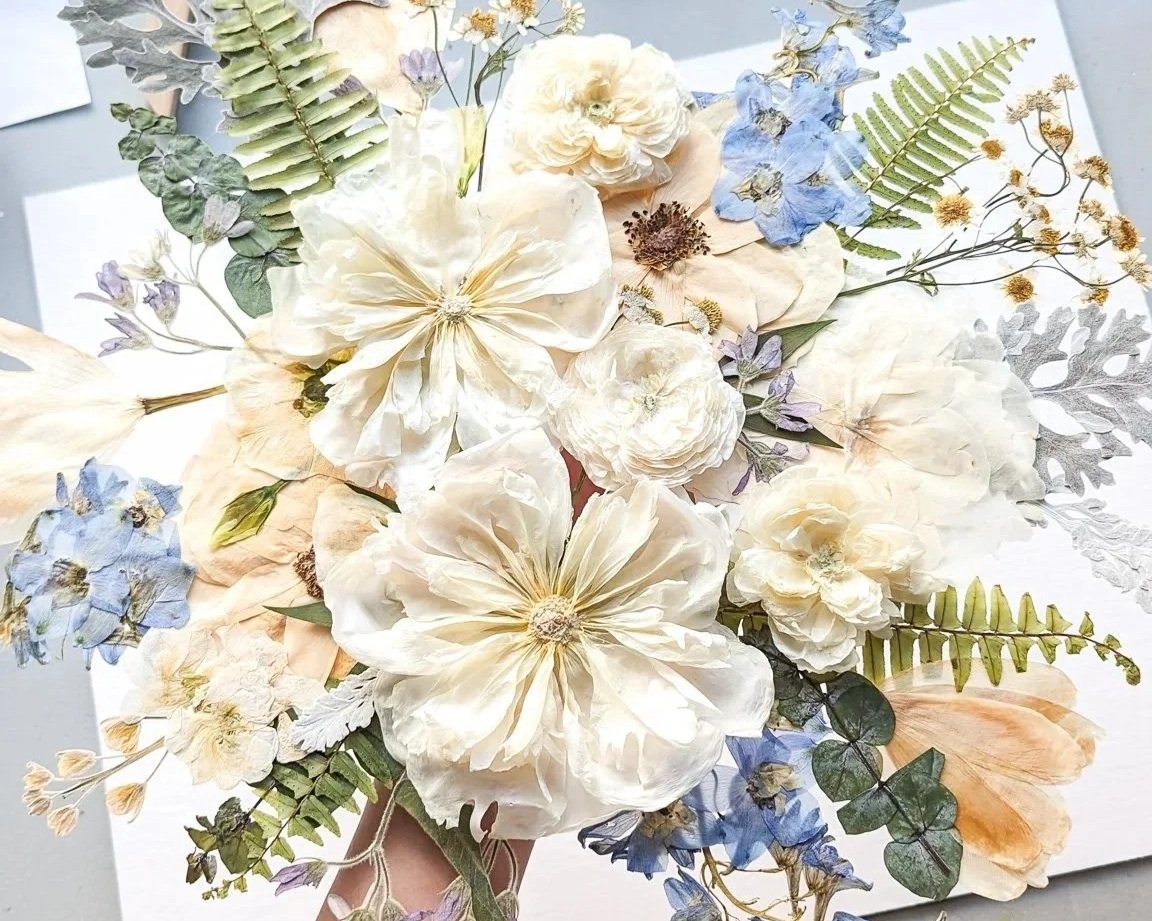
My client initially wanted a floating style but after I explained some of the downsides, especially the potential wall color clash, she decided to go with a matted option (see below).
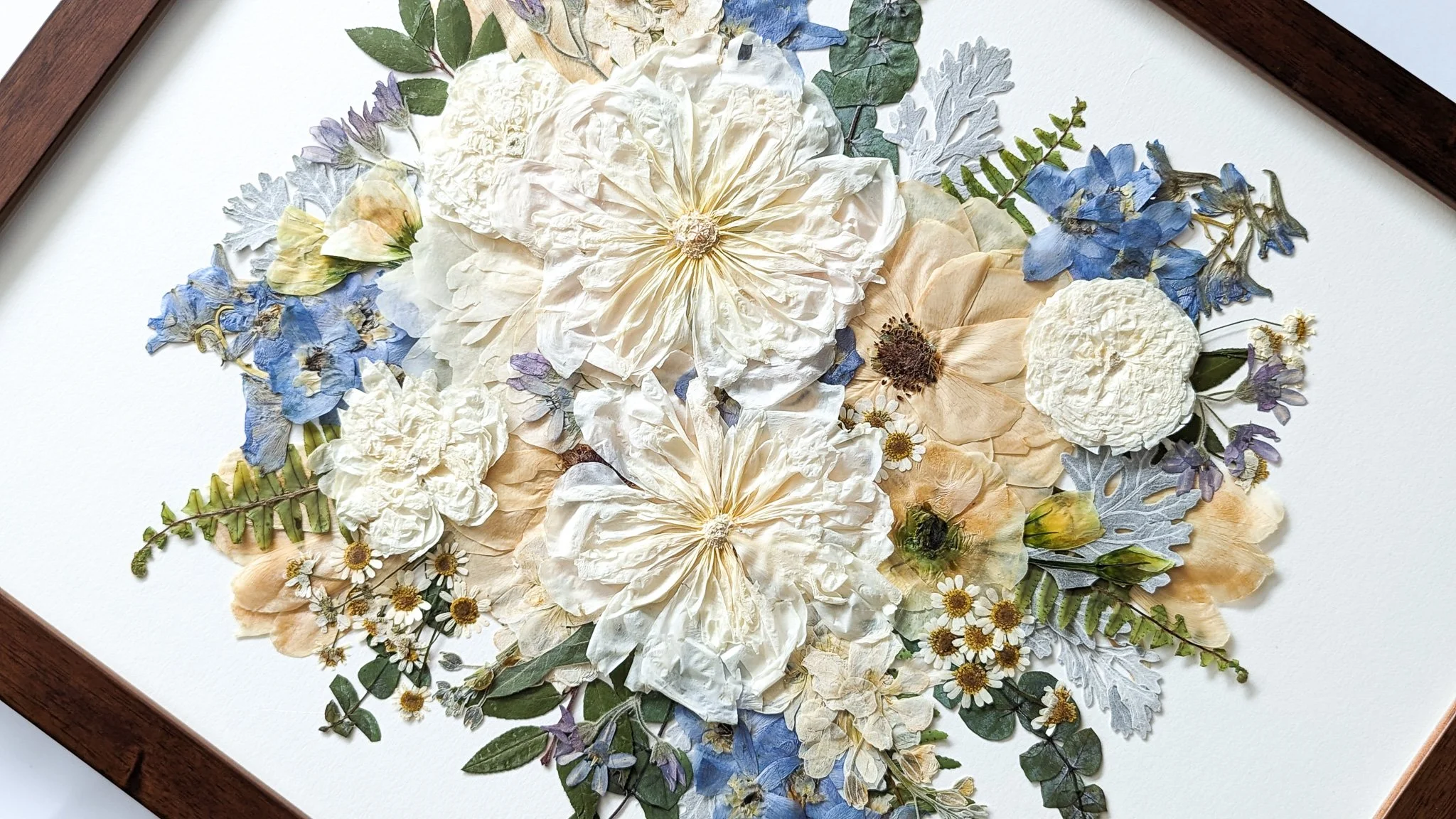
A soft white archival mat ensures your flowers are in focus no matter your decor.
With a floating frame, your wall color is locked into the design. If you're certain you'll keep the same wall color forever, this might not matter. Most people aren't certain about that.
The UV protection complexity
This is where floating frames get technically complicated in ways that directly affect how long your flowers stay vibrant.
UV light causes fading. We all know this. What people don't always realize is that with floating frames, UV rays can penetrate from both the front and the back of the piece. You need UV protection on both glass panes.
Here's where it gets tricky: the UV-treated surface of the glass must face inward, toward the flowers, on both sides. If the UV coating faces outward, it's not protecting your flowers. Many preservation services offer floating frames with only one UV-protective pane, which means your flowers are exposed to UV damage from one direction. Some offer both panes but install them incorrectly.
Verifying proper UV protection is harder with floating frames than with matted frames. With a matted frame, you have one pane of museum glass installed in a standard way. With floating frames, you're trusting that both panes are UV-protective and that both are installed with the treated surface facing the flowers.
If this isn't done correctly, your investment will fade faster than it should. And you won't know there's a problem until months or years later when the color loss becomes obvious.
Limited versatility
Floating frames work best in specific settings. Modern homes. Minimalist aesthetics. Neutral color palettes. White or very light walls.
If your style is traditional, eclectic, maximalist, or if you have richly colored walls, floating frames can feel out of place. They're designed for a particular look, and they don't adapt well to other contexts.
What happens if you move to a new home with a different aesthetic? What if you redecorate in five years and your style shifts? Matted frames are chameleons. They work in nearly any setting because the mat provides a buffer between the flowers and the surrounding space. Floating frames are specialists. They excel in their niche and struggle outside it.
For a piece you plan to keep for decades, versatility matters.
When floating frames might actually be the right choice
I don't want to suggest that floating frames are never appropriate. There are situations where they genuinely make sense.
If you have a dedicated gallery wall with a white or neutral backdrop that you're confident won't change, a floating frame can be stunning there. If your entire home has a consistent modern aesthetic and you're deeply committed to that style long-term, the look might be worth the trade-offs. If you've seen the specific artist's floating frame work in person (not just in photos) and you're comfortable with the visible debris and permanence factors, go ahead.
The critical factor is confirmation that both UV panes are properly installed with the treated surface facing inward. Ask directly. Get it in writing. This isn't something to assume.
If all these conditions align and you genuinely prefer the floating aesthetic after considering the practical limitations, then a floating frame might be right for you.
When I recommend matted frames instead
Most situations, honestly.
Matted frames give you longevity, versatility, and reliability. If there's any chance you'll move homes or change your decor, matted frames adapt. If you want maximum protection from UV damage with straightforward verification, matted frames deliver. If you value the option to potentially service the piece years down the line, matted frames allow it.
The aesthetic difference between a floating frame and a matted frame with minimal matting is smaller than you might think. You can achieve clean, modern lines with a thin mat border. The practical advantages of the matted approach are significant.
What to ask if you're set on floating frames
If you're determined to go the floating frame route after considering everything I've shared, here are the questions you need to ask your preservation artist:
Are both glass panes UV-protective, or just one? If only one, which one and why?
How are the UV panes installed? Specifically, which surface faces the flowers on the front pane and which surface faces the flowers on the back pane?
Can you show me examples of your floating frame work after two to three years, not just freshly completed pieces? How do they look compared to when they were new?
What's your policy on trapped debris and flower fragments? Do you guarantee a certain level of cleanliness, or is some visible debris considered normal?
Is there any servicing option if something shifts or detaches inside the frame, or is it truly permanent once sealed?
These aren't hostile questions. They're due diligence. Any reputable preservation artist should be able to answer them clearly and confidently.
Questions to ask yourself before deciding
Beyond clarifying the questions above with your preservation artist, spend some time with these questions for yourself:
Is this frame style a passing trend that appeals to me right now, or is it genuinely aligned with my long-term aesthetic preferences?
Do I plan to move homes or significantly redecorate in the next 10 years?
Am I comfortable with the idea of trapped debris as an inherent characteristic of this framing style?
Does my current wall color (and any future wall colors I might choose) work with a see-through back?
Your answers to these questions matter more than anyone else's opinion about what looks good.
The bottom line
There's no universally wrong choice here. Some people genuinely love their floating frames and have no regrets about the trade-offs. The style works perfectly for their space and their needs.
Others wish they'd chosen matted frames for the flexibility and reliability. They didn't fully understand what they were giving up when they prioritized the floating aesthetic.
My goal isn't to talk you out of floating frames if they're truly right for you. My goal is to help you make an informed decision rather than choose based on what looks good in someone else's portfolio.
The flowers you're preserving matter to you. The frame style should serve those flowers and your life, not just photograph well.
If you're in the Chicago area and want to talk through your framing options for your specific bouquet, reach out. I'm happy to discuss what would work best for your situation, whether that's floating frames, matted frames, or something else entirely.