

You've decided to preserve your bouquet. You've researched artists, compared portfolios, maybe even reached out for quotes. And now you're stuck on a question that feels surprisingly high-stakes: pressed frame or resin block?
This isn't a small decision. Preservation is a significant investment, often $1,000 or more. You'll live with the result for decades. And the two options create completely different objects that age in completely different ways. Choose the wrong one for your lifestyle, and you might end up with a beautiful piece that doesn't quite fit your home or your habits.
Here's what you need to know to make the right call.
The fundamental difference
Pressed flower frames are 2D art. Your flowers are carefully flattened over several weeks, arranged into a composition, and framed behind glass. The result hangs on a wall like a painting or photograph.
Resin blocks preserve flowers in three dimensions. The blooms are dried (usually with silica), then suspended in clear epoxy resin that hardens into a solid block or shape. Resin can become a decorative object, a functional piece like a coaster or tray, or jewelry.
This distinction shapes everything else: how the pieces age, where you display them, and what happens over the years.
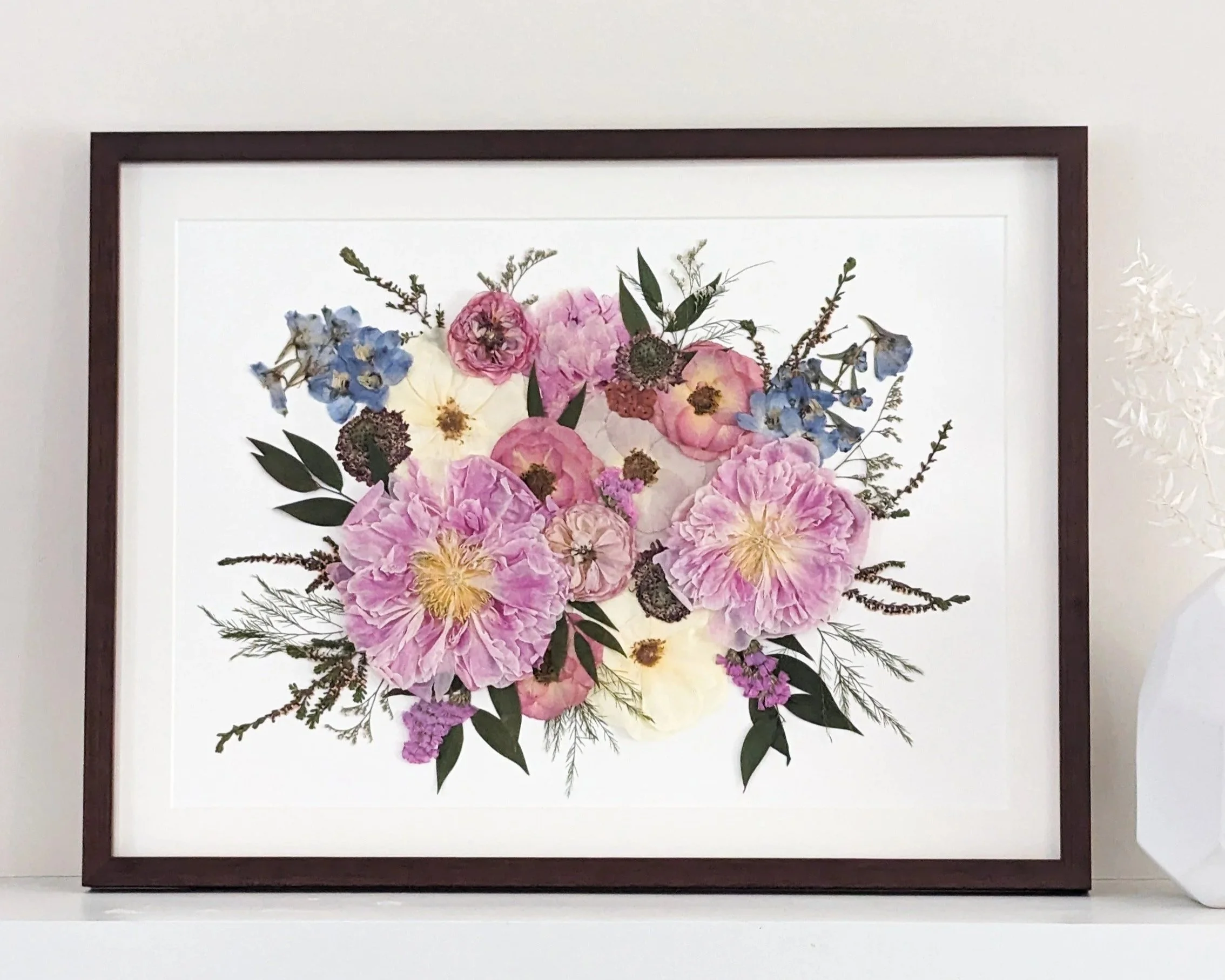
A wedding bouquet I preserved in 2023. All the materials are museum grade and each flower is color corrected to help maintain its beauty for decades, not just a couple years.
How they age differently
Pressed flower frames with archival materials can look beautiful for decades. When I say archival, I mean acid-free matting that won't yellow or degrade, museum glass that blocks 99% of UV light, and proper sealing against humidity. The key is keeping them out of direct sunlight and in a reasonably stable environment.
Resin ages differently. Here's what most people don't know until they've owned a resin piece for a while: all epoxy resin yellows over time, typically within 12 to 24 months. Even high-quality UV-stabilized resin will eventually shift toward amber tones. The yellowing accelerates with sun exposure and heat. And generally, the thicker the resin piece (e.g., a block), the more visible the yellowing will be, especially if the background is clear rather than tinted.
This isn't a defect. It's the nature of the material. Some people appreciate how resin develops a warm patina, similar to how leather ages. Others prefer pieces that maintain their original appearance year after year.
Functional resin pieces like coasters and trays face additional wear. Surface scratches accumulate with use. The glass-like finish dulls over time. If you use a resin coaster every day, it will show that history.
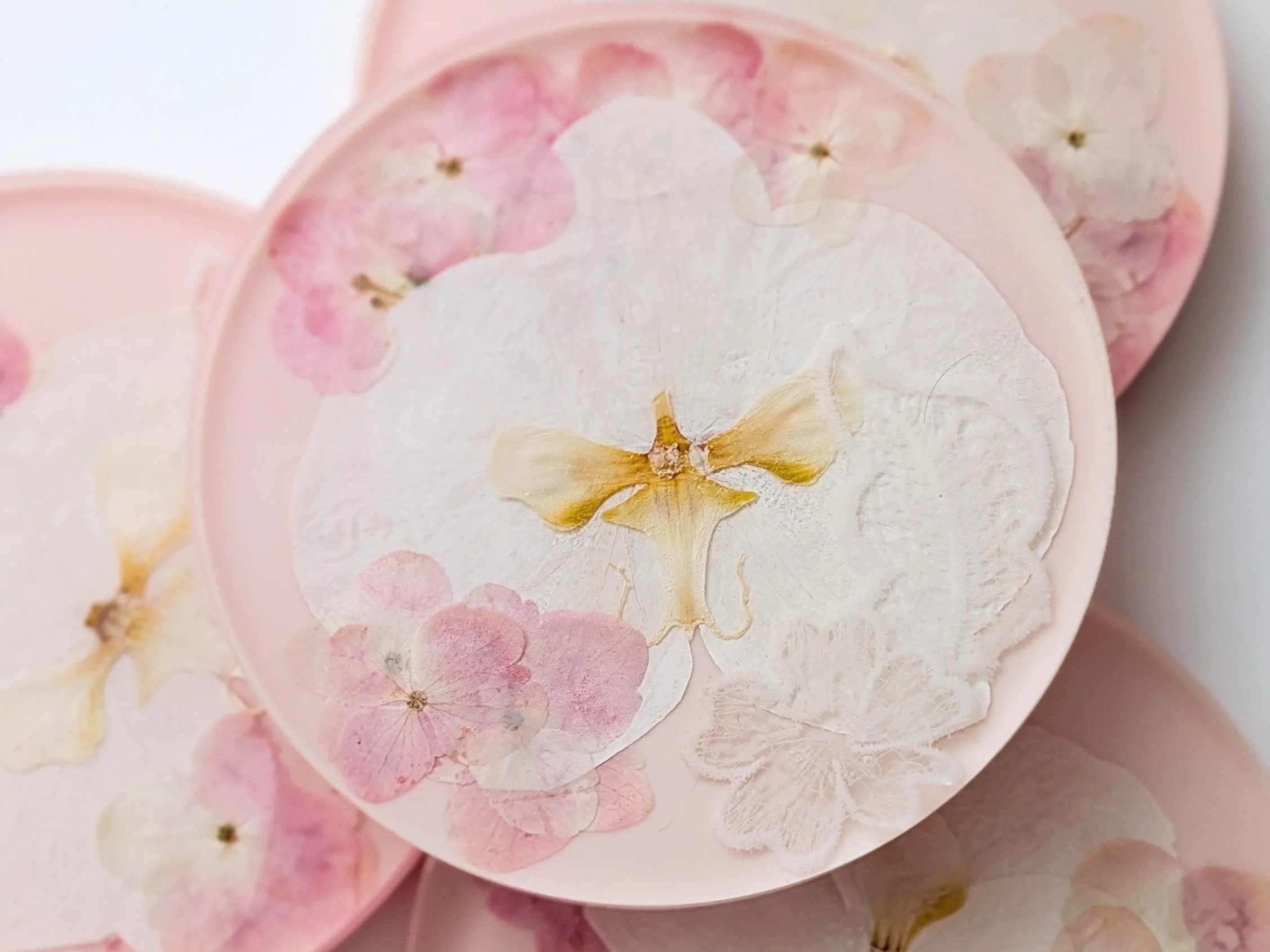
Opting for a colorful background will help mask the yellowing.
Questions to ask yourself
The best way to decide is to think about how your preserved flowers will actually live in your home.
Do you want art or an object? A pressed frame functions like any other artwork. It hangs on a wall and becomes part of your visual environment. A resin block or functional piece lives on a shelf, table, or in your hands. Some clients want both: a frame for the wall and coasters they actually use.
Where will you display it? A large frame needs wall space. If you're renting or move frequently, consider whether you'll always have a good spot for a 16x20 piece. Smaller resin objects can travel more easily and fit into different spaces as your life changes.
How much light does the space get? Direct sunlight accelerates both flower fading and resin yellowing. If your ideal display spot catches afternoon sun, you'll need museum-grade glass for a frame (which I include standard) or accept faster aging in resin. Pressed frames with proper UV protection handle light exposure better over time.
Are you comfortable with patina? Resin will yellow. Functional pieces will scratch. If you want something that looks the same in ten years as it does today, pressed frames are the safer choice. If you appreciate objects that show their age and tell their story, resin can be beautiful in its evolution.
Do you want to gift pieces to family? Many clients split their bouquet into multiple keepsakes: a frame for themselves, jewelry for mothers, ornaments for bridesmaids. Resin works well for small giftable items. Pressed frames make lovely gifts too, though they require recipients to have wall space.
A note on frame styles
If you're leaning toward a pressed flower frame, you'll also need to choose between matted frames and floating frames. Floating frames create a striking "suspended in air" look, with flowers visible between two panes of glass. Matted frames provide their own backdrop and offer more control over the final presentation.
Each style has characteristics worth understanding before you decide. I've written a separate article on floating frames vs. matted frames that covers the practical details.
What I recommend
For clients who want a statement piece that will look beautiful for decades, I recommend pressed flower frames. The longevity is superior, the display is elegant, and with archival materials and gentle color restoration (which I include on every commission), you're getting something built to last.
Resin makes sense when you want something functional, something you can hold and use, or when you're creating multiple small pieces as gifts. Just go in with realistic expectations about how the material ages.
Some clients choose both. They commission a pressed frame as the main keepsake and add resin coasters or jewelry as secondary pieces. This gives you the best of both approaches: enduring art for your wall and tangible objects you can touch every day.
The bottom line
Your preserved flowers should fit seamlessly into your life, whether that's as a focal point on your wall or sweet daily reminders on your coffee table. Neither choice is wrong. The right one depends on how you want to live with your preserved bouquet for years to come.
If you're still weighing your options and want to talk through what would work best for your flowers and your space, I'm always happy to have that conversation.